

From selling slime to $25,000 education business: The story of 18-year-old Ayike Bektemisheva

In an interview with Economist.kg, Ayike Bektemisheva spoke about her first business ideas, launching courses for university applicants, and plans for developing AdmitLab.
«I always wanted to create something»
Ayike developed an interest in entrepreneurship during her childhood. She always liked coming up with new projects, creating something of her own, and trying to sell it.
«I was always an initiative-driven child, always doing something, creating things, and wanting to sell. In the fourth grade, I sold slime, various toys, and jewelry», she recalls.
Later, when she began preparing for admission to a foreign university, her hobby evolved into projects meant to become part of her portfolio.
One of her first serious ventures was the Urpak clothing brand. A team of six produced hoodies featuring images of prominent figures from Kyrgyzstan, including Sayakbay Karalaev and Beksultan Jakishov. With this project, the team participated in a business incubator at the American University of Central Asia (AUCA) and took third place.
«This inspired me greatly. It was my first serious venture, and we made some money from it. Not very much, but still the first money from something of my own», Bektemisheva says.
Continuing the work alone did not work out. The team broke up: someone left, someone stopped participating, and Ayike herself focused on university admissions. But she had no intention of stopping.



English for women
The next project was She Speaks, a free English language course for women over 30. The idea came about thanks to Ayike's mother, who works in the medical field and collaborates with Switzerland, but, according to her daughter, was not fluent in English.
«I thought: in reality, we have many women who did not have the opportunity to study English at school or university. They balance household chores, work, and caring for children and family, and they do not have the opportunity to attend some kind of courses», she says.
Ayike decided to make learning more comfortable for this audience. Together with a language school, she organized thematic classes dedicated to travel, work, and daily life. Classes ran from February to the end of the summer of 2024. About 10 women studied in a single group.
For Ayike, this was another experience—this time not so much commercial as social.
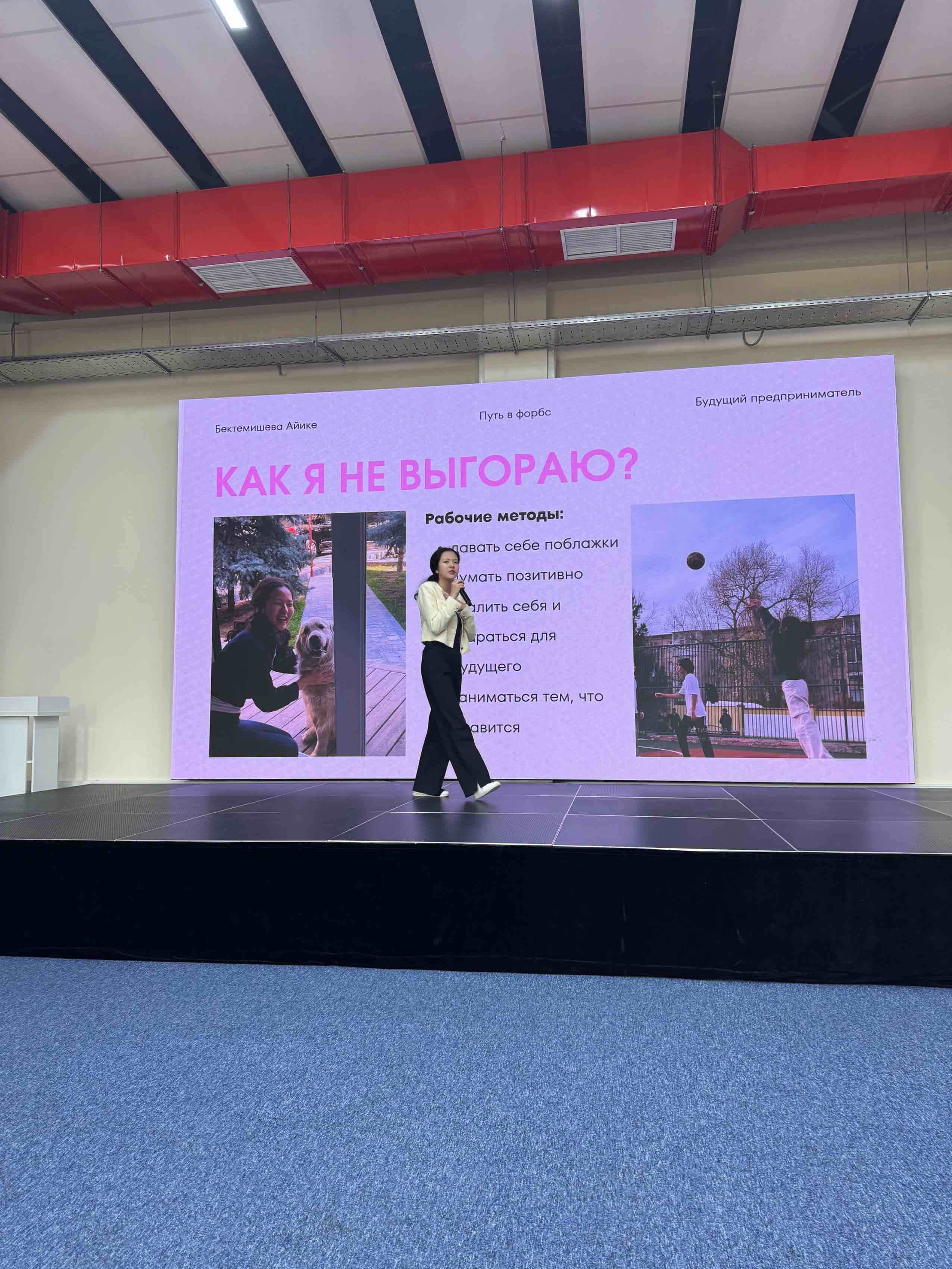
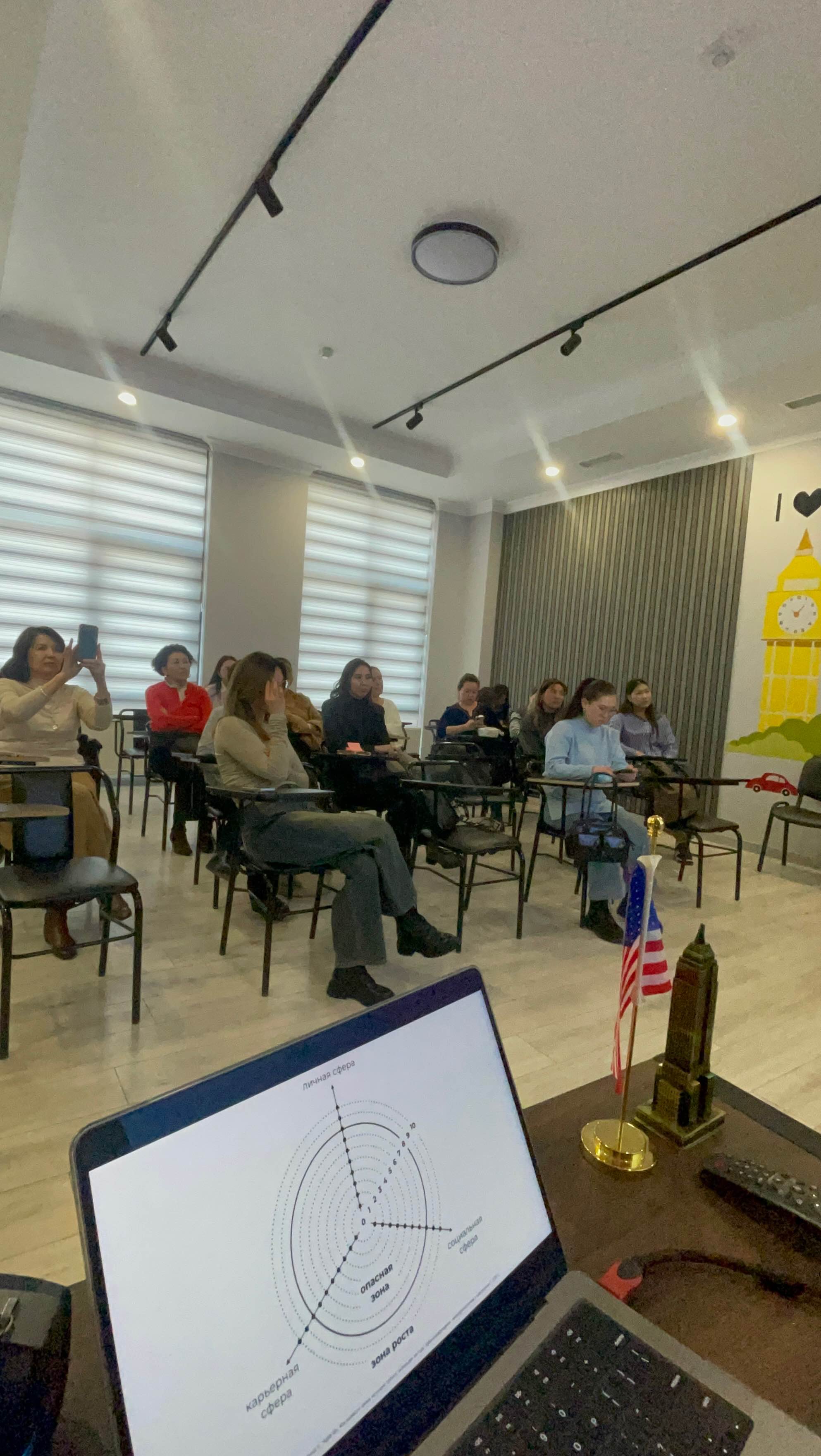

From free webinars to AdmitLab
The idea of creating AdmitLab emerged in March 2026. Ayike began implementing it together with her friend Alikhan Kozubayev, who, like herself, is studying abroad.
Initially, they wanted to create a guide for admission to foreign universities, but abandoned the idea. Then they decided to launch a platform where students could get information about admissions and ask questions.
«Initially, these were not courses. It was simply a platform where people could ask Alikhan and me questions about admission to foreign universities», Bektemisheva says.
By that time, Alikhan already ran a blog and had an audience among schoolchildren planning to apply abroad. Therefore, he became the public face of the project.
The team began holding free webinars with alumni of foreign universities. Among the speakers were young people who entered Vanderbilt University, the University of British Columbia, and universities in New York, Abu Dhabi, and Shanghai. Some of them received full grants.
After several webinars, schoolchildren began asking whether AdmitLab had full-fledged preparation courses for admission.
«We thought: why not? Why not try to launch such a project?», Ayike recalls.
How AdmitLab works
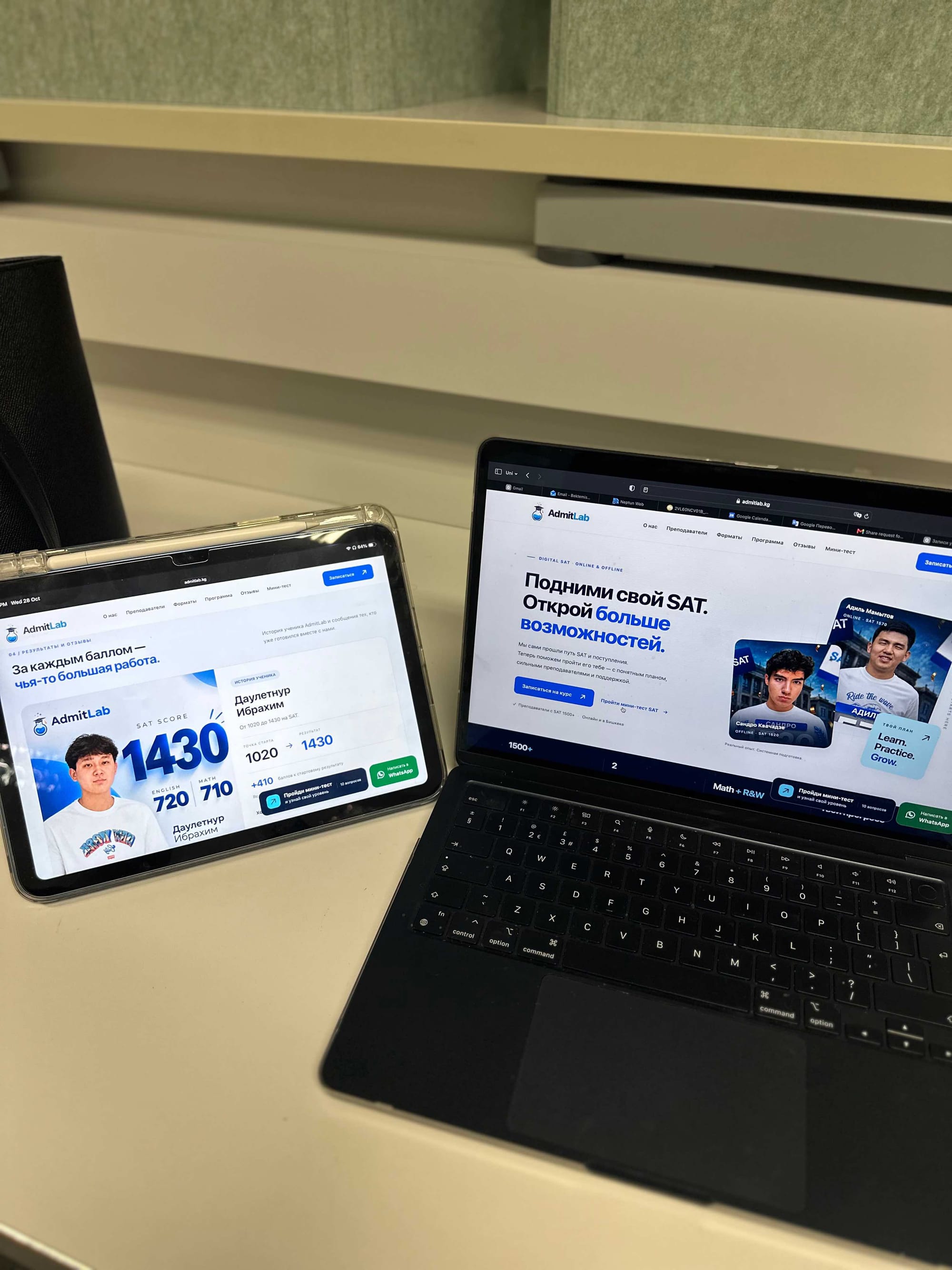
The first area of focus was SAT preparation courses. Later, IELTS courses were added.
AdmitLab does not provide full admission support and does not submit documents for students. The main objective of the project is to prepare schoolchildren for exams while consulting them on admission matters.
Each group has a curator who monitors learning and helps students. In addition, once every two weeks, Ayike and Alikhan join the classes to answer questions about admissions.
If a student has a question about an essay, they can also ask the team and receive feedback without paying separately.
The first classes were held online. Then the team began holding offline classes, having arranged with a school to rent premises.
Now, according to Ayike, AdmitLab is launching its fifth cohort. Throughout its operation, about 70 people have completed the training. The cumulative turnover of the project since the launch of the courses has reached $25,000.
She considers the most difficult task not launching the project, but the need to manage it remotely.
In the summer, Ayike and Alikhan worked together in the office. Now she is in Hungary, and her partner is in Canada. Because of the time difference, they have to structure their work differently.
«I do not want AdmitLab to be just courses»
In the future, Ayike wants to turn AdmitLab from a set of educational courses into a full-fledged platform. One idea is to use artificial intelligence so that a student can upload information about their education, grades, and experience, and the system can help assess their chances of admission to various universities.
«I see AdmitLab not just as courses, but as something larger on a broader scale. We will probably make such a platform so that it is convenient for students to ask for admission advice, and maybe connect some kind of AI», she says.
The user will be able to collect information about their case in one place and receive recommendations regarding universities.
«I want AdmitLab to grow and for us to help students not only with exams, but with something greater», Bektemisheva says.

«Do not be shy about your ideas»
Ayike's own experience has also influenced her advice to students who want to enter foreign universities. She believes that good grades and Olympiad results are important, but do not exhaust an applicant's potential.
«Admission is not only about grades and essays. If you have any ideas for projects, I think you shouldn't be shy», she says.
According to her, many schoolchildren talk about their ideas, but do not dare to implement them.
«Out of 10 people, about seven are shy and do not launch their projects, trying to apply using only grades. But I think people underestimate the case regarding projects, the resume, and what you specifically did in practice», the entrepreneur believes.
Therefore, her main advice is not to wait for the perfect moment.
«I think it's better to do projects than to do nothing at all. You shouldn't be shy about your ideas», Ayike says.


