
Five years of tax reform in Kyrgyzstan — key changes for businesses and individuals

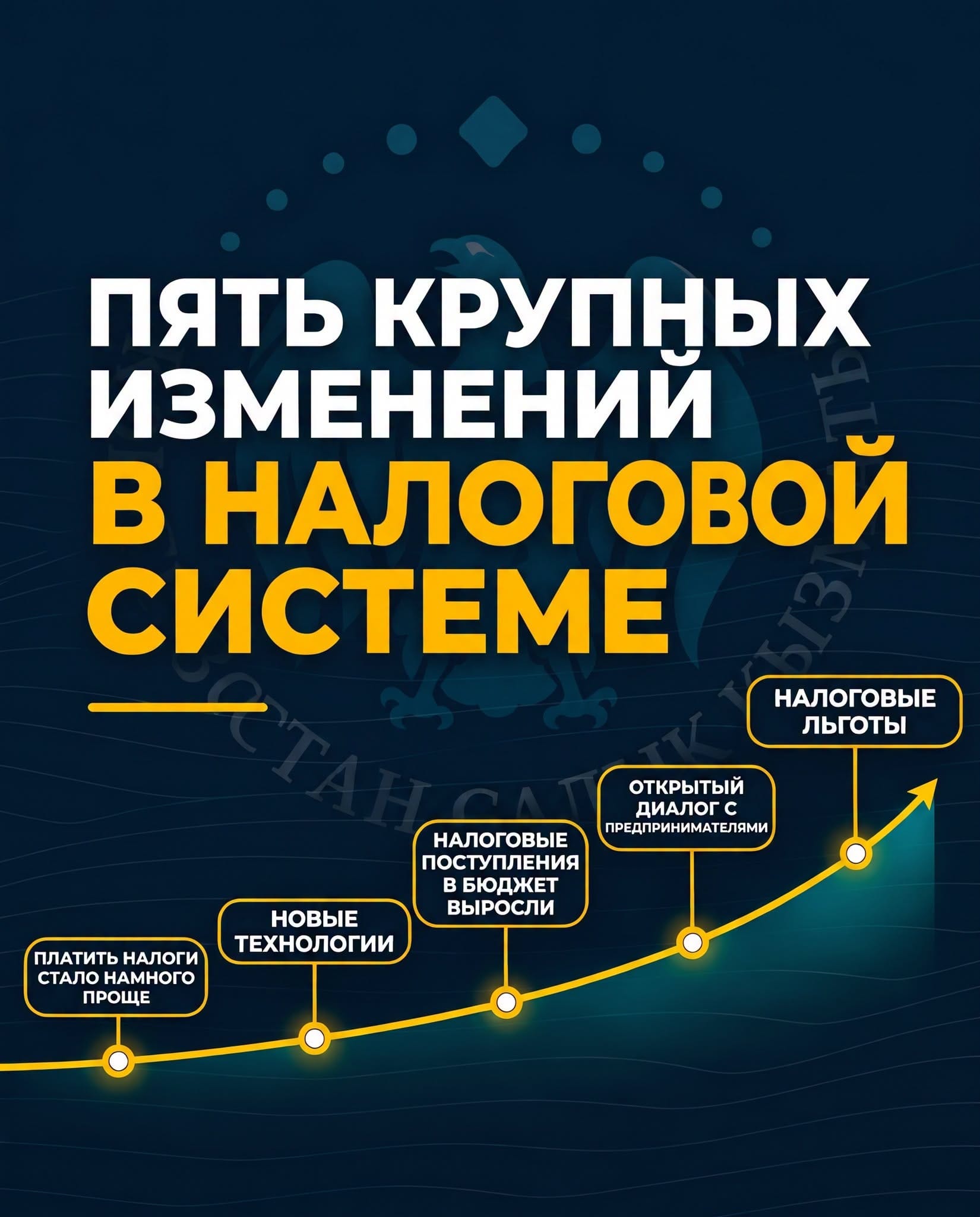
Over the past five years, Kyrgyzstan has introduced a 0% rate under the single tax regime for eligible small businesses, abolished vehicle tax and some mandatory reporting requirements, expanded tax relief and moved most tax services online. Tax revenue nearly tripled, rising from 105 billion som in 2021 to 308 billion som in 2025. The State Tax Service (STS) has outlined five main outcomes of the reforms.
Tax revenue for January–October 2026 exceeded 338 billion som, according to the STS, surpassing the total for the whole of 2025. The changes also affected how individuals and businesses deal with the tax authorities.
Easier tax payments and access to services
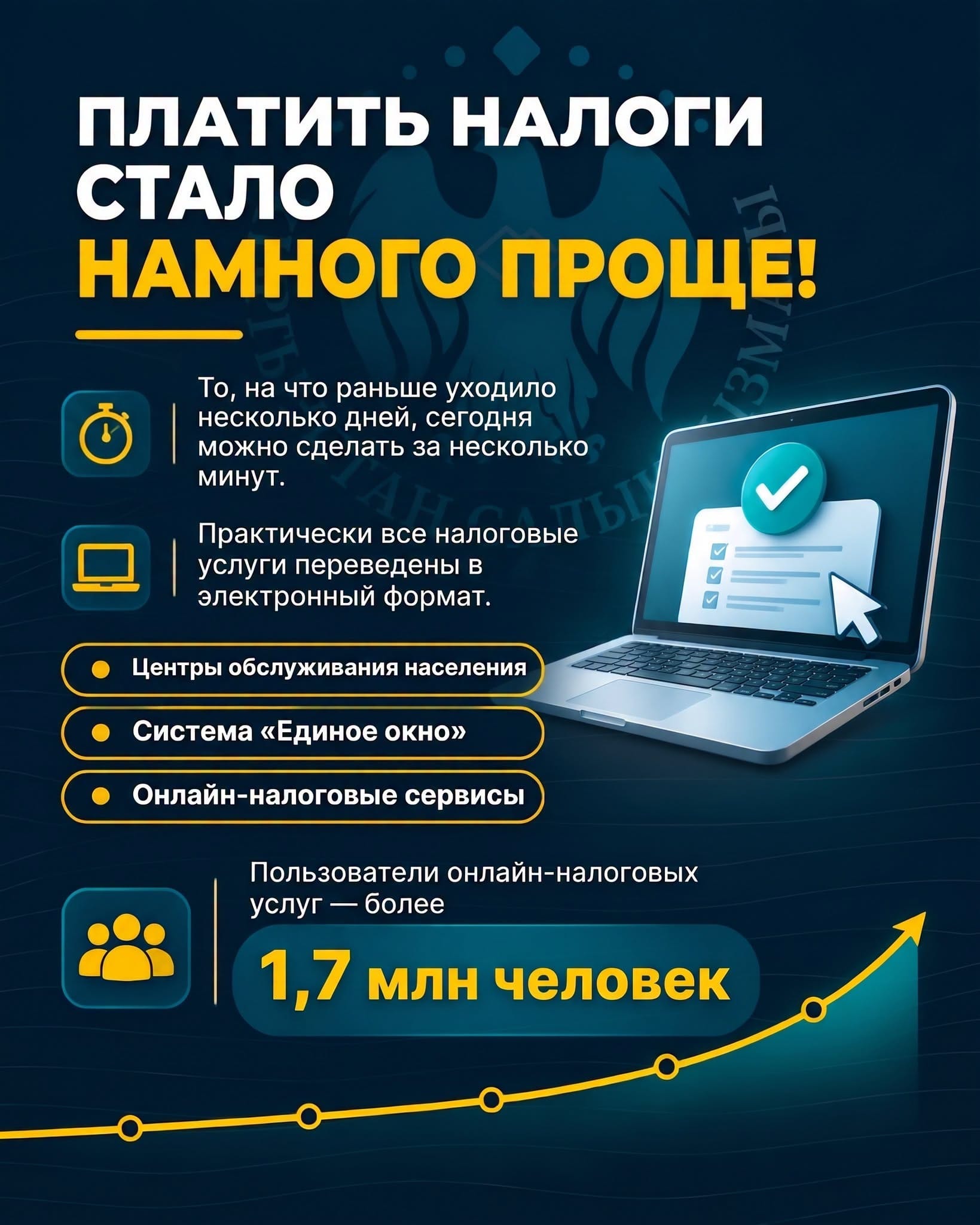
Over the past five years, the STS has moved most services online. Taxpayers can now submit tax reports, obtain documents and access other services without visiting a tax office.
According to the STS, its online services have more than 1.7 million users.
The service is also developing public service centres and a one-stop service system. Procedures that once took several days can now be completed in minutes in some cases.
Businesses can handle most routine tax matters remotely, while individuals can obtain services without queuing or making extra trips.
Lower taxes for small businesses and selected sectors
One of the main changes has been broader access to tax relief for entrepreneurs.
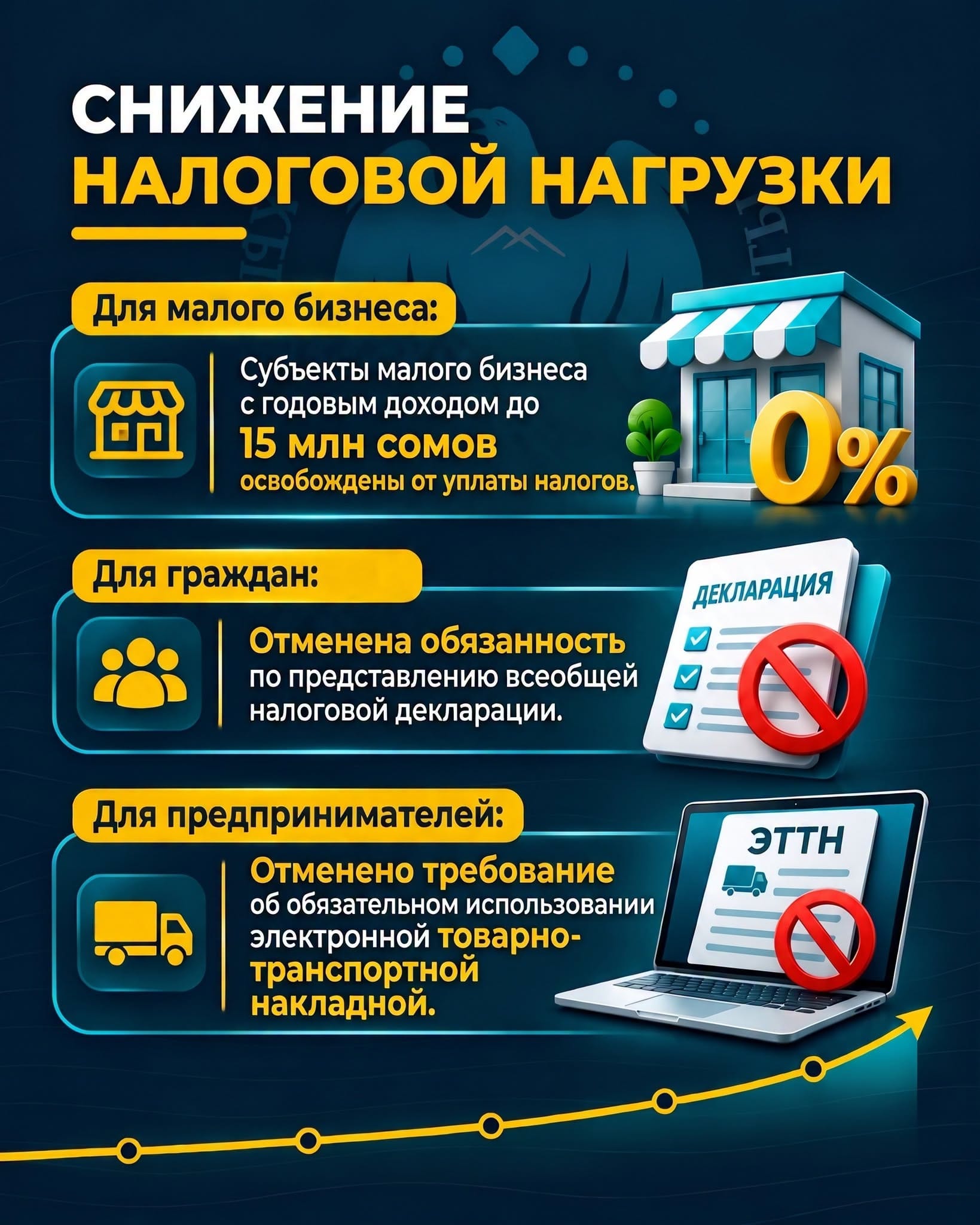
Certain categories of individual entrepreneurs with annual revenue of up to 15 million som can qualify for a 0% rate under the single tax regime. Entrepreneurs must meet the eligibility requirements, including rules on cash register use and proper documentation.
Economist.kg has previously explained the conditions for qualifying for the zero rate. A 0% single tax rate does not mean exemption from all other mandatory payments.
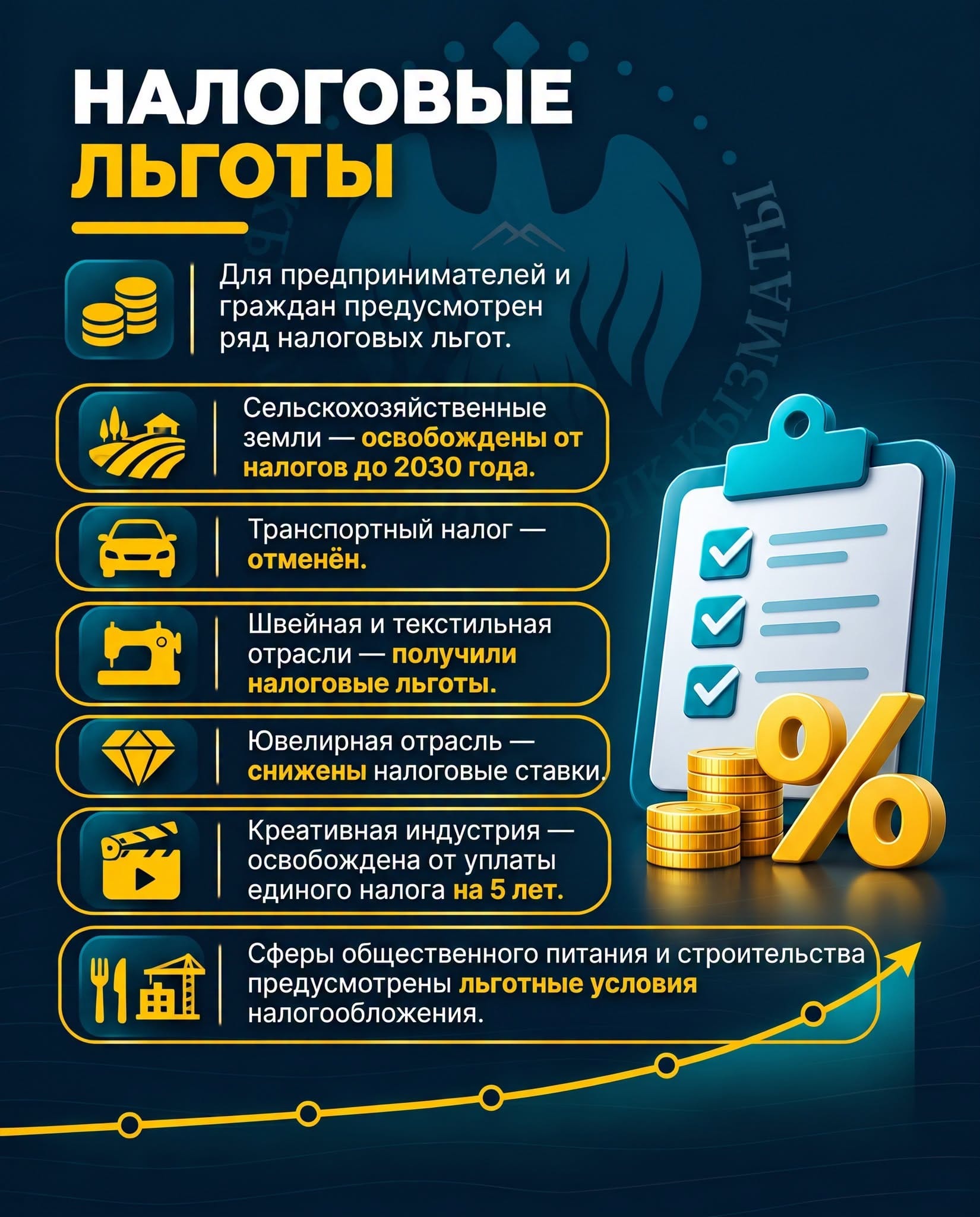
In 2026, the authorities also expanded tax incentives for several sectors.
- Garment and textile manufacturing. The single tax rate was reduced from 0.25% to 0% for the period 1 August–31 December 2026.
- Jewellery. Eligible businesses were granted a preferential single tax rate of 0.25%.
- Creative industries. Residents of the Creative Industries Park were exempted from the single tax for five years, from 1 August 2026 to 31 July 2031.
- Agriculture. The moratorium on land tax for agricultural land was extended until 2030.
- Foodservice and construction. Special tax arrangements were established for certain categories of businesses.
Vehicle tax abolished and reporting requirements reduced
The changes also affected individuals.
Kyrgyzstan abolished vehicle tax with effect from 1 January 2025. The authorities also announced an amnesty for vehicle tax arrears incurred before that date.
The replacement arrangement provided for a levy of one som per litre of petrol or diesel, to be collected through fuel prices.
Another change was the abolition of universal income declaration requirements for individuals. Certain categories of individuals and other taxpayers must still file a unified tax return.
The documentation requirements for transactions involving goods also changed substantially.
From 1 September 2026, Kyrgyzstan removed the requirement to use electronic waybills (ETTN) for most goods. The requirement remains for transactions involving crude oil and petroleum products, with exemptions for specified categories of oils.
Digital tracking of goods continues. For certain product categories, the authorities replaced the previous arrangements with a traceability system and the updated ESF 2.0 electronic invoicing module.
Economist.kg reported on these changes in September.
More digital tools for tax oversight
Alongside simplifying procedures, the STS is expanding its use of automated tax administration systems.
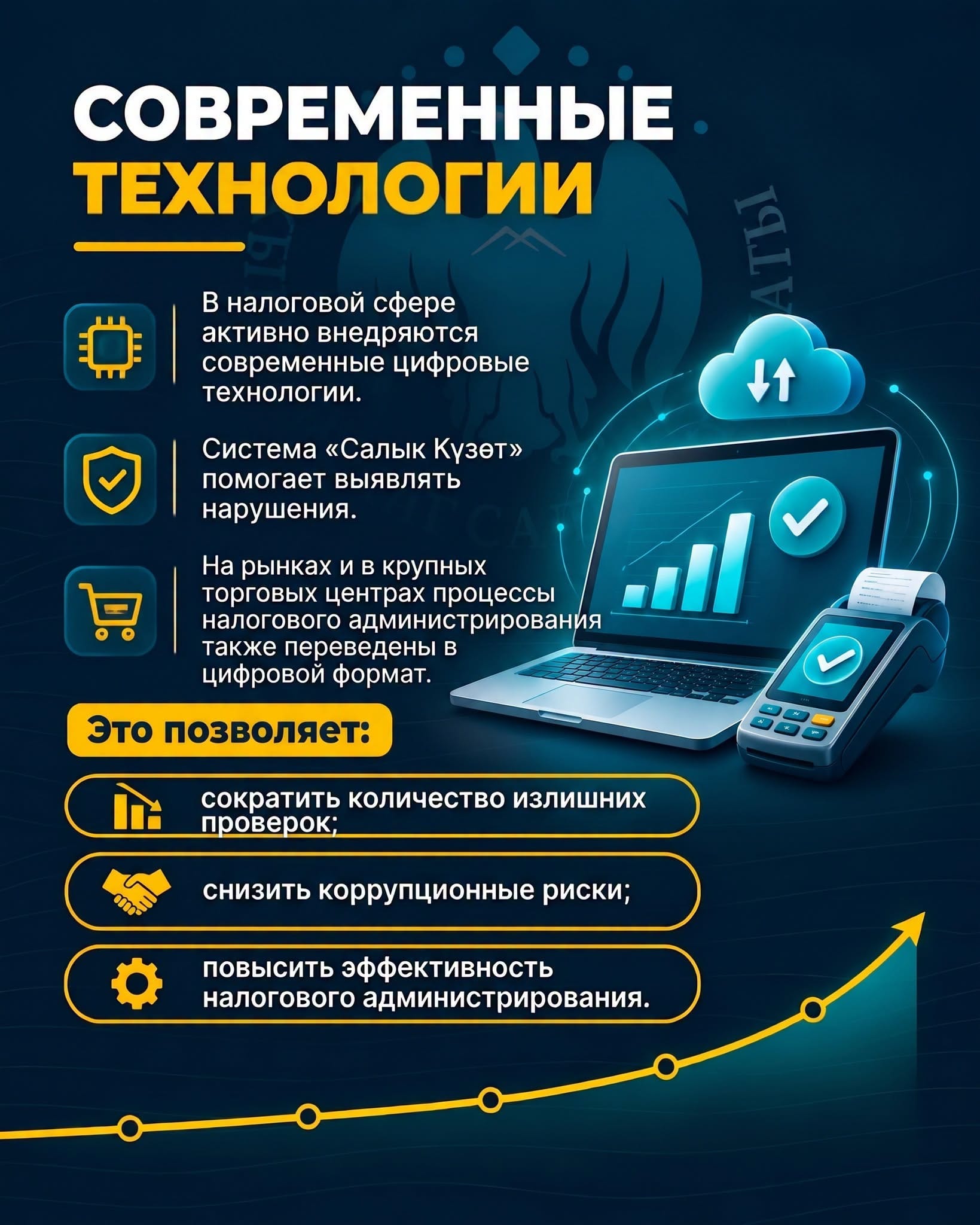
One of its key tools is Salyk Küzöt, a system that analyses tax data and flags potential violations.
It brings together information from different government information systems and helps identify taxpayers with risk indicators.
The service plans to shift from blanket inspections towards targeted checks based on data analysis. Tax authorities retain the right to conduct inspections on the grounds specified by law.
Electronic tools for record keeping and tax administration have also been introduced at markets and large shopping centres.
According to the STS, these tools help reduce unnecessary inspections, direct contact between businesses and inspectors, and corruption risks.
The STS also cites open dialogue with businesses as another priority. It meets with entrepreneurs to discuss disputed requirements and consider proposals for changing tax procedures.
Tax revenue nearly tripled over five years
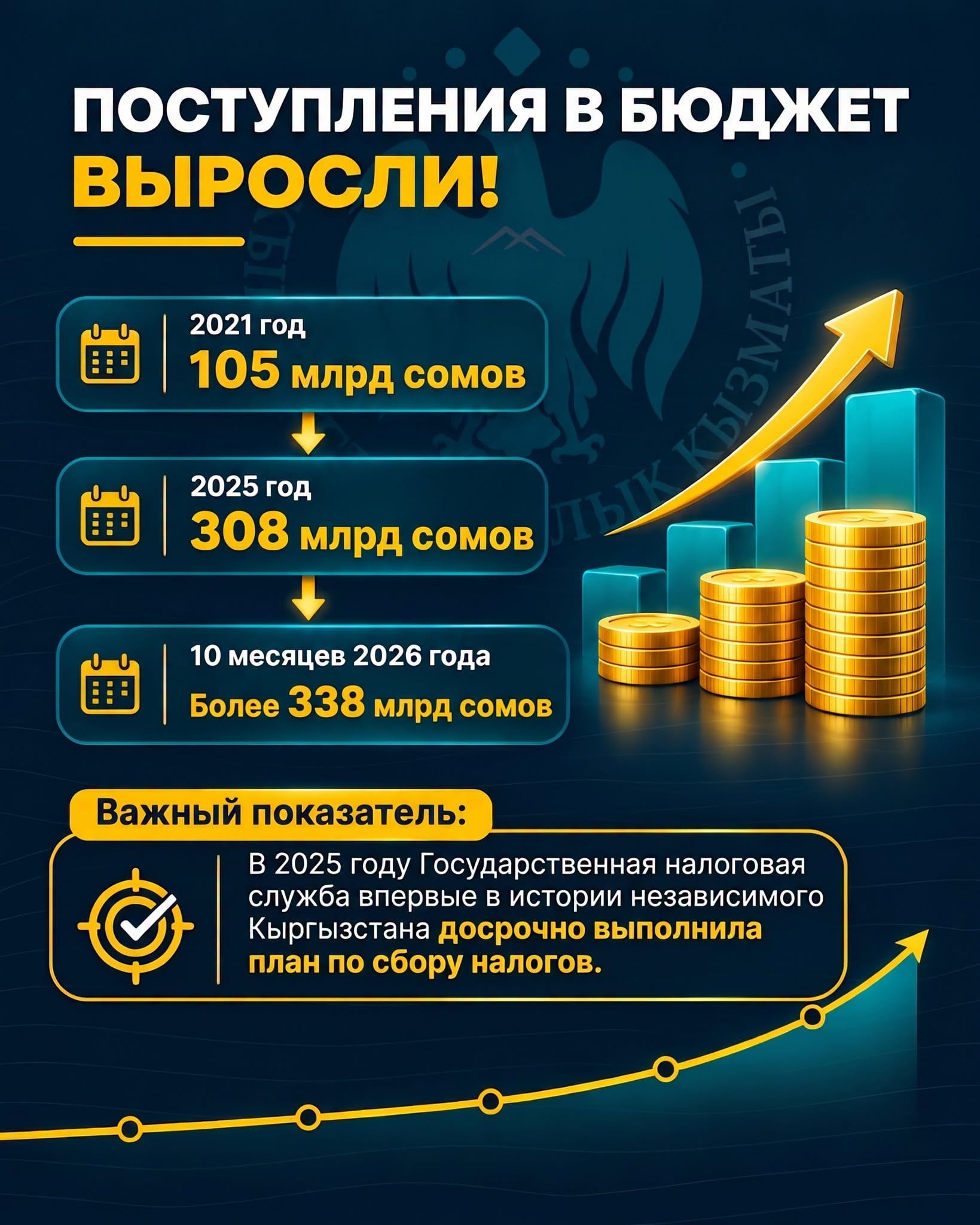
According to the STS, tax revenue reached the following levels.
- 2021 — 105 billion som
- 2025 — 308 billion som
- January–October 2026 — more than 338 billion som
Annual tax revenue rose by 203 billion som between 2021 and 2025, bringing the 2025 total to 2.93 times the 2021 level.
The STS also said it met its annual tax collection target ahead of schedule in 2025 for the first time since Kyrgyzstan gained independence.
Economist.kg previously analysed the STS’s financial results in more detail. As of 5 November 2026, combined receipts from taxes and social insurance contributions had reached 426.87 billion som. This comprised 339.72 billion som in taxes and 87.15 billion som in social insurance contributions.

For economic news from Kyrgyzstan, follow Economist.kg on Telegram and WhatsApp. We are also on Facebook, Instagram, Threads and X.


